‘Light-hearted’ thriller lacks detailed plot
 |
| The Seven Dials Mystery is more thriller than mystery |
She also
said that she found "light-hearted, thriller type" novels easy to
write as they didn't require too much plotting or planning. This is a very
revealing comment and may resonate with some readers if they have found they
don’t enjoy her thrillers as much as her detective stories.
I read
The Seven Dials Mystery for the second time recently because I am working
through Agatha Christie’s novels in chronological order to review them all here.
Although
I have found her Poirot novels keep getting better as I have been going along, I
didn’t think The Seven Dials Mystery was as enjoyable as her previous
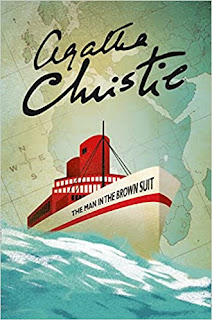
thrillers, The Secret Adversary and The Man in the Brown Suit.
I found
the dialogue at the opening of the book reminiscent of a Bertie Wooster novel by P G Wodehouse, when a group of young people are enjoying breakfast together at a country house party,
and characters called Ronny, Pongo, and Socks, are coming up with a jolly idea
for a joke to play on one of their fellow guests.
Agatha
Christie can just about convince readers that the police are grateful for the
help of Poirot or Miss Marple with their cases, but to believe that Superintendent
Battle of Scotland Yard is eager to enlist the help of Bundle, aka Lady Eileen
Brent, for espionage work later in the book, is perhaps stretching credibility
too far.
The
novelist Val McDermid writes, in her introduction to the 2017 paperback edition
of The Seven Dials Mystery, that Agatha Christie is deliberately subverting the
thriller genre to poke fun at it. This may be true, or it could be that Agatha
Christie was enjoying her new freedom following her divorce and felt like writing
something fun and frothy rather than putting in the hard grind to produce one
of her clever, tightly plotted, detective stories that would keep the reader
guessing until the end.
The original dust jacket of the
1929 first edition
The
review in the Times Literary Supplement of 4 April 1929 was
for once markedly unenthusiastic about a Christie book, saying: "It is a
great pity that Mrs Christie should in this, as in a previous book, have
deserted the methodical procedure of inquiry into a single and circumscribed
crime, for the romance of universal conspiracy and international rogues.”
However,
my slight disappointment with The Seven Dials Mystery, which was Agatha
Christie’s ninth novel, won’t deter me from reading her other thrillers when I finally
get to them.
I’m looking
forward now to re-reading Number 10 on the chronological list, which is Murder
at the Vicarage. This 1930 mystery novel introduces her amateur detective, Miss
Marple, who is my favourite Agatha Christie detective character.